
Deepstash: Smarter Every Day!
DeepstashEducation
4.65.03K Reviews
- Version
- 33.1.3
- Installs
- 5.00M
- Age Rating
- Everyone
Screenshots
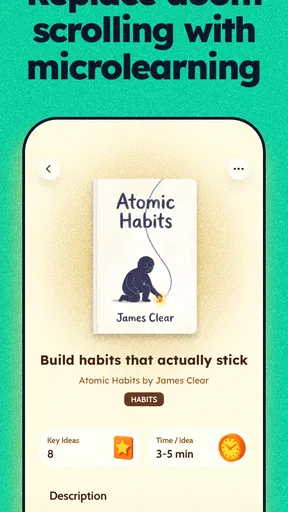
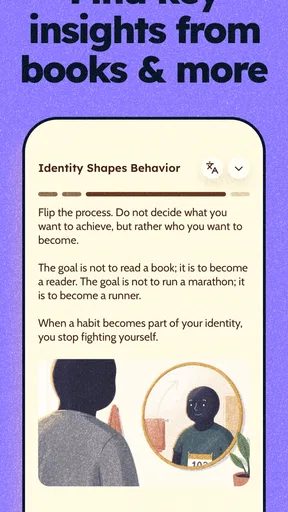
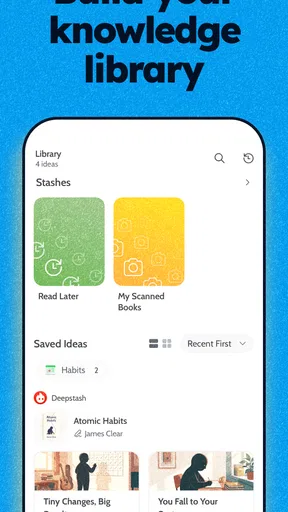
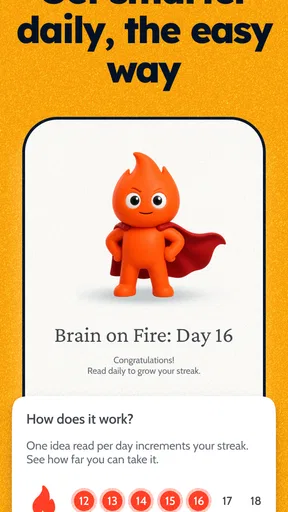
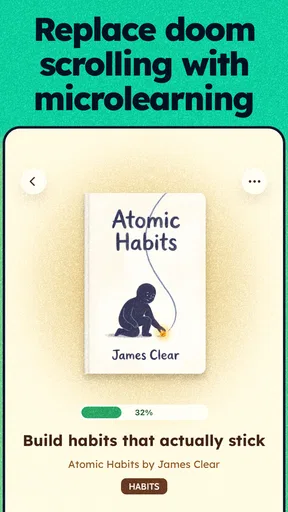
Our Review of Deepstash: Smarter Every Day!
 Analysis by Appyee
I see Deepstash as a better fit for curious people who want a useful idea to carry into the day than for readers seeking a thorough course or a substitute for a whole book. Its appeal is the low commitment: instead of setting aside an hour, I can dip into a short piece of learning and decide whether a subject deserves more attention. That makes it easy to return to, but it also means the app works best as a starting point rather than a finish line.
Small reading sessions, with a purpose
Developed by Deepstash, this free education app is built around concise ideas drawn from books and other knowledge-oriented material. The central promise is not that a few minutes will make anyone an expert; it is that a short session can introduce a concept, sharpen a question, or give me a memorable prompt to think about later. I find that distinction important. Bite-sized learning is useful when it creates momentum, but it can be misleading if I mistake familiarity with a summary for deep understanding.
The format suits the gaps that appear naturally in a day. I can read while waiting for an appointment, during a quiet part of a commute, or before starting a task that needs a little mental reset. A long-form book asks me to protect a block of time and keep a thread in mind. Deepstash asks for less attention at once, which lowers the barrier to starting. The trade-off is that shorter pieces may leave out the context, evidence, and qualifications that make an idea persuasive.
One practical way to use it is to approach a session with a question rather than scrolling without a goal. If I am trying to improve how I plan my work, for example, I can look for ideas related to habits or focus, read selectively, and note which suggestion seems testable in my own routine. That turns passive browsing into a small experiment. I would not treat any single insight as a universal rule; I would use it as a hypothesis and see whether it helps.
What makes the short format worthwhile
The strongest part of Deepstash is the way it makes learning feel approachable without requiring a formal study setup. I do not need to find a quiet hour, gather materials, or decide in advance that I am committing to a full book. That is particularly helpful when I have an interest I want to explore but do not yet know whether it will hold my attention. A short introduction can help me identify the ideas worth pursuing in greater depth.
It can also serve as a useful bridge between reading and action. After encountering an idea, I can pause and ask how it relates to something I am already doing. A note about communicating clearly, for instance, becomes more useful if I apply it to the next email or conversation rather than simply moving on to another card. The most valuable habit is to leave each session with one question or action, not a pile of vaguely familiar concepts. That small bit of reflection helps compensate for the speed of the format.
There is a second benefit for people with wide-ranging interests. A focused book is usually the better choice when I already know what I want to study, but a compact idea can expose me to a topic I might not have chosen on my own. That makes the app a reasonable discovery tool. It can help me decide what deserves a book, a course, or a conversation, rather than pretending that a quick read has already supplied the full answer.
For a realistic everyday routine, I would use it at the end of a lunch break: pick one subject, read a handful of pieces, then write down a single idea worth trying that afternoon. If nothing feels relevant, I would stop rather than keep browsing just to maintain a streak of activity. The point is not to maximize the number of snippets consumed; it is to make a small amount of attention produce something I can remember or use.
Where summaries can fall short
The obvious limitation is also the format’s defining feature: compression. Complex arguments often depend on examples, competing explanations, and conditions that do not fit neatly into a short summary. An idea can sound crisp and convincing when separated from its original context, even if the full source is more cautious. When a topic affects an important decision, I would follow the thread back to a book, an expert source, or a more complete explanation instead of relying on a brief takeaway.
There is also a risk of mistaking variety for progress. Moving quickly across unrelated ideas feels productive, but it can leave me with fragments rather than knowledge I can recall. I get more from choosing a theme for a session and returning to it than from treating the feed as a contest to collect as many insights as possible. This is not a flaw unique to Deepstash; it is a pressure built into snackable learning. The user has to supply some structure.
Another trade-off is that short content is not automatically the most efficient option. If I already have a specific question and need a reliable, detailed answer, searching for a focused article or reading the relevant chapter of a book is usually more direct. Deepstash is more appealing when I want a compact prompt or a broad introduction. It is less suitable when I need a carefully sourced explanation, technical instruction, or a sequence of lessons that builds skills step by step.
I would also be deliberate about how much browsing I allow. A stream of appealing ideas can encourage the feeling that every topic deserves a quick look, and that can turn a learning break into distraction. Choosing a purpose beforehand—exploration, a practical question, or a short mental reset—makes it easier to stop when the session has done its job. If I want sustained concentration, I am better off opening one substantial source and staying with it.
Who is likely to get the most from it
Deepstash is a sensible choice for readers who enjoy learning in small intervals, like sampling different subjects, or want a gentle way to build a reading habit. It can be especially handy for someone who has trouble beginning a long book but is willing to spend a few minutes with an idea. I would also recommend it to people who already read widely and want occasional prompts that point them toward subjects to investigate further.
It is not my first recommendation for someone who wants a structured curriculum, academic depth, or a dependable reference for high-stakes decisions. A textbook, well-organized course, library book, or subject-specific publication will usually provide more continuity and context. Likewise, if notifications and feeds tend to pull you away from focused work, a dedicated reading session with a chosen source may be a better match than an app designed around quick discovery.
Compared with the usual alternatives in education, Deepstash occupies a middle ground. It is lighter than a full book and less sequential than a course. That flexibility is its strength when the goal is curiosity or idea discovery, but its weakness when the goal is mastery. I would use it alongside deeper learning rather than instead of it: let a short insight reveal a question, then use a more substantial source to test and understand the answer.
The app is rated for Everyone, so its intended audience is broad, but that does not mean every short idea will suit every reader or age equally. Parents choosing educational material for a child should still take an interest in what the child is reading and discuss ideas that need context. For adult learners, the larger question is whether a compact format helps them return to learning consistently or merely gives them another feed to check.
Cost, reputation, and what to expect
The app is free to install, with in-app purchases ranging from $12.99 to $119.99 per item. I would begin with the free experience and decide whether the reading format fits my habits before considering a purchase. The range is broad enough that I would check the specific offer and its terms in the app store rather than assume every paid option provides the same thing. Paying only makes sense if the extra value addresses a need I actually have, not simply because the app has made browsing enjoyable.
Its reception is strong: Deepstash has a 4.6 average from around 201,000 ratings, with roughly 5,000 written reviews, and more than 5 million installs. Those figures suggest that the short-learning approach has found a substantial audience, though they cannot tell me whether the content style will suit a particular reader. I would weigh them as reassurance that the app is established, not as proof that every summary is equally useful or that it replaces careful reading.
The current version is 33.1.3, and it requires Android 7.0 or later. The release date was April 16, 2019. In practical terms, it has been around long enough to develop an audience, while the version and operating-system requirement are details worth checking against the device I plan to use. Those facts do not change the central question: whether I want brief idea-led reading or a more deliberate learning tool.
My verdict: a useful spark, not the whole fire
Deepstash is worth trying if you want learning to fit into small pockets of time and you are willing to follow promising ideas beyond the summary. I like its role as a low-pressure starting point: it can help me discover a subject, reflect on a thought, or make a short break feel more intentional. The best results come when I choose a purpose, slow down enough to connect an idea to real life, and pursue anything important in greater depth.
I would skip it if I were looking for a complete course, detailed evidence, or a direct answer to a specialized question. For everyone else, the free entry point makes it easy to test whether this style of learning clicks. My recommendation is measured but positive: use it as a spark for curiosity, keep your expectations realistic, and let the ideas that matter lead you toward fuller sources rather than treating a quick read as the final word.
Privacy and Permissions
See what permissions an app requests and how it handles your data.
- Contacts
- read your contacts, modify your contacts
- Location
- approximate location (network-based)
- Photos/Media/Files
- read the contents of your USB storage, modify or delete the contents of your USB storage
- Storage
- read the contents of your USB storage, modify or delete the contents of your USB storage
- Camera
- take pictures and videos
- Microphone
- record audio
- Wi-Fi connection information
- view Wi-Fi connections
- Other
- view network connections, full network access, change your audio settings, run at startup, draw over other apps, control vibration, prevent device from sleeping
Verdict
Strengths of Deepstash: Smarter Every Day!
- Daily recommendations make it easy to discover fresh ideas.
- Short reads fit into small breaks throughout the day.
- Topics span personal growth and a range of other interests.
- Saving ideas helps build a useful personal knowledge library.
- A clean interface keeps browsing simple and focused.
Limitations of Deepstash: Smarter Every Day!
- Some summaries may oversimplify complex subjects.
- The free experience may include frequent prompts to subscribe.
- Recommendations can feel repetitive after extended use.
- Many ideas offer limited depth compared with full books.
- Offline access may not cover all saved content.
Similar Picks in This Category
View All
Duolingo: Language Lessons
Duolingo4.7

Google Classroom
Google LLC2.8

Unacademy: Learn & Crack Exams
Unacademy3.2

Bible App for Kids
Life.Church4.4

Cake - Learn English & Korean
Cake Corp.4.7

Brainly: AI Homework Helper
Brainly4.5
Frequently Asked Questions
What is Deepstash: Smarter Every Day!?
Deepstash is a learning and personal-growth app that presents ideas from books, articles, podcasts, and other sources as short, easy-to-read summaries called “stashes.” Instead of working through a full-length book or lengthy article, you can browse concise takeaways on topics such as productivity, psychology, health, and business. The format is designed for quick reading, though a summary is not a substitute for every detail or perspective in its source.
Is Deepstash free to use?
You can generally explore Deepstash and read some content without paying, but access to features or the full library may depend on the current plan and subscription options offered in your region. Check the app’s listing and its in-app purchase screen before subscribing, since prices, trials, and plan details can change. If you start a trial or paid plan, review the renewal terms and cancellation instructions through your Apple or Google account.
What can I do with the ideas I find in Deepstash?
Deepstash is built around discovering and organizing bite-sized ideas. You can browse subjects that interest you, save useful takeaways to revisit, and use collections or personalized recommendations to shape what you read next, depending on the features available in your version. This can make the app handy for building a reading habit or collecting inspiration, but it is worth checking original sources when you need context, evidence, or more detailed guidance.
Does Deepstash work offline, and can I use it on different devices?
Offline access and synchronization can vary by feature, subscription, app version, and device, so do not assume that every item will be available without an internet connection. Some content may need to load online, and saved ideas may require an account to sync across devices. Before relying on Deepstash for travel or offline reading, test the specific save or download options in the app and confirm that you are signed in on each device.
Is Deepstash suitable for children, and what should I know about privacy?
Deepstash covers a wide range of subjects, and not every idea will be suitable for every age or reading level. Parents should review the app’s content and the age guidance shown in the relevant app store before allowing a child to use it. The app may collect account, usage, or device information to provide its services; read its current privacy policy and store disclosures to understand what is collected and how settings or account deletion work.
